The Disordered Framing of Disorders
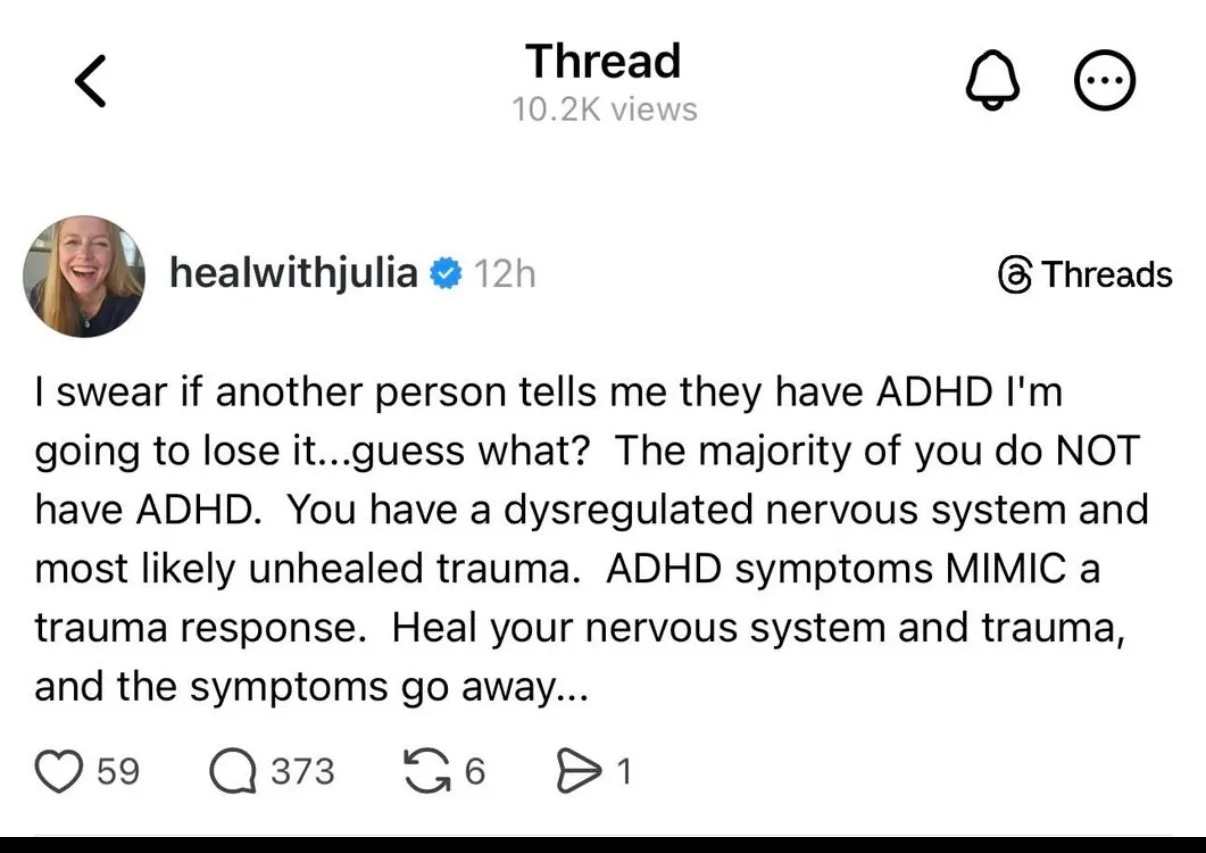
Is ADHD even real? It is a question I routinely hear. Sometimes it’s asked out of a place of self-denial, out of fear of clinging to some false label, when really they “should just do better”. Other times it’s asked with an unjustifiable skepticism, with a tone that implies those who present with executive dysfunction are just lazy and making excuses while struggling to manage. Or maybe it’s a question stemming from a belief that the very concept of a diagnosis is merely the health care machine’s profiting off the pathologization of a universal human experience. Or the classic metaphysical dilemma, just because you observe it, does that necessarily mean it’s real?
What if there is some truth in all of these concerns? What if we can’t possibly answer the question of any given disorder’s ‘truth’ due to the limitations of our time? Why does a label even matter?
It matters because for many people it clarifies so much about their existence. It matters because when properly treated, following the best practices established for a given set of symptoms, it poses far less harm to others than when left unaddressed. I see it play out when someone finds the right medications that address the pieces where, despite adhering to common guidelines, they feel drained, overwhelmed, and unable to live the life they desire. I see it when psychoeducation points someone towards an avenue in better understanding that their struggles weren’t some character flaw and identify coping strategies or frameworks to help navigate the experience. And them benefitting from seeking defined treatment does not appear to harm anyone else.
It is not unwise to be critical of what any given diagnosis means, what the consensus is between different disciplines and philosophies, and whether or not there are better explanations. I also acknowledge that there is certainly a medical model that profits off of packaging human suffering into individualized explanations for what are largely reactions to an inherently oppressive social contract. But what so often gets in the way is dogmatic beliefs that have helped us at one time in our lives, to the point that we refuse to accept counter evidence and use our ideology as a source of ego comfort.
ADHD will certainly be called something else entirely soon enough. Neurodivergent will become an offensive term we can’t use in public. We will absolutely look back at the way we treated any given disorder with horror, shame, and disdain. And if you don’t believe me, just know what we presently understand as ADHD was, at one point, called Minimal Brain Dysfunction. Kinesthetic Disorder at another time. ADD took on an “H” in the late 80s. And right now John Ratey & Edward Hollowell are advocating for it to be called VAST (Variable Attention Stimulus Trait) moving forward.
However, the fact that we will broaden our understanding does not mean that we should discount the findings of our time. Completely unlike the work of therapy, where the individual often sheds unnecessary guilt around their past, we as a collective should be willing to be ashamed of our past selves and conduct. We owe it to ourselves to be self-critical and always seeking ways to disprove and improve the collective consensus. As it stands, the DSM uses a language of pathology in framing what are better understood as either divergent or detrimental human experiences to what appears to be a made-up standard of ‘average human experience’. I’ll simply end this paragraph with a quote attributed to Alfred Adler: “The only normal people are the ones you don’t know too well”.
ADHD is real in that there is a subset (estimates range anywhere from 4-10% globally) that meets established criteria for the given diagnosis, which was based on the work of multidisciplinary teams following decades of research, all aimed at improving understanding and treatment. And as with any profession, there are obviously those who will use our knowledge gaps to exploit others while boasting an undeserved assurance around their ’truths’. But that’s not most people. I see so many researchers agonize over the politics impacting lab culture, I see so many therapists recognizing the band aid nature of therapy when systemic change is needed, I see those with a love of chemistry navigating a tricky relationship where profits overpower their desire for bettering human lives. Humans are imperfect beings, but I believe we’re all doing our best to aid each other through this journey.
Is ADHD even real? It is a question I routinely hear. Sometimes it’s asked out of a place of self-denial, out of fear of clinging to some false label, when really they “should just do better”. Other times it’s asked with an unjustifiable skepticism, with a tone that implies those who present with executive dysfunction are just lazy and making excuses while struggling to manage. Or maybe it’s a question stemming from a belief that the very concept of a diagnosis is merely the health care machine’s profiting off the pathologization of a universal human experience. Or the classic metaphysical dilemma, just because you observe it, does that necessarily mean it’s real?
What if there is some truth in all of these concerns? What if we can’t possibly answer the question of any given disorder’s ‘truth’ due to the limitations of our time? Why does a label even matter?
It matters because for many people it clarifies so much about their existence. It matters because when properly treated, following the best practices established for a given set of symptoms, it poses far less harm to others than when left unaddressed. I see it play out when someone finds the right medications that address the pieces where, despite adhering to common guidelines, they feel drained, overwhelmed, and unable to live the life they desire. I see it when psychoeducation points someone towards an avenue in better understanding that their struggles weren’t some character flaw and identify coping strategies or frameworks to help navigate the experience. And them benefitting from seeking defined treatment does not appear to harm anyone else.
It is not unwise to be critical of what any given diagnosis means, what the consensus is between different disciplines and philosophies, and whether or not there are better explanations. I also acknowledge that there is certainly a medical model that profits off of packaging human suffering into individualized explanations for what are largely reactions to an inherently oppressive social contract. But what so often gets in the way is dogmatic beliefs that have helped us at one time in our lives, to the point that we refuse to accept counter evidence and use our ideology as a source of ego comfort.
ADHD will certainly be called something else entirely soon enough. Neurodivergent will become an offensive term we can’t use in public. We will absolutely look back at the way we treated any given disorder with horror, shame, and disdain. And if you don’t believe me, just know what we presently understand as ADHD was, at one point, called Minimal Brain Dysfunction. Kinesthetic Disorder at another time. ADD took on an “H” in the late 80s. And right now John Ratey & Edward Hollowell are advocating for it to be called VAST (Variable Attention Stimulus Trait) moving forward.
However, the fact that we will broaden our understanding does not mean that we should discount the findings of our time. Completely unlike the work of therapy, where the individual often sheds unnecessary guilt around their past, we as a collective should be willing to be ashamed of our past selves and conduct. We owe it to ourselves to be self-critical and always seeking ways to disprove and improve the collective consensus. As it stands, the DSM uses a language of pathology in framing what are better understood as either divergent or detrimental human experiences to what appears to be a made-up standard of ‘average human experience’. I’ll simply end this paragraph with a quote attributed to Alfred Adler: “The only normal people are the ones you don’t know too well”.
ADHD is real in that there is a subset (estimates range anywhere from 4-10% globally) that meets established criteria for the given diagnosis, which was based on the work of multidisciplinary teams following decades of research, all aimed at improving understanding and treatment. And as with any profession, there are obviously those who will use our knowledge gaps to exploit others while boasting an undeserved assurance around their ’truths’. But that’s not most people. I see so many researchers agonize over the politics impacting lab culture, I see so many therapists recognizing the band aid nature of therapy when systemic change is needed, I see those with a love of chemistry navigating a tricky relationship where profits overpower their desire for bettering human lives. Humans are imperfect beings, but I believe we’re all doing our best to aid each other through this journey.