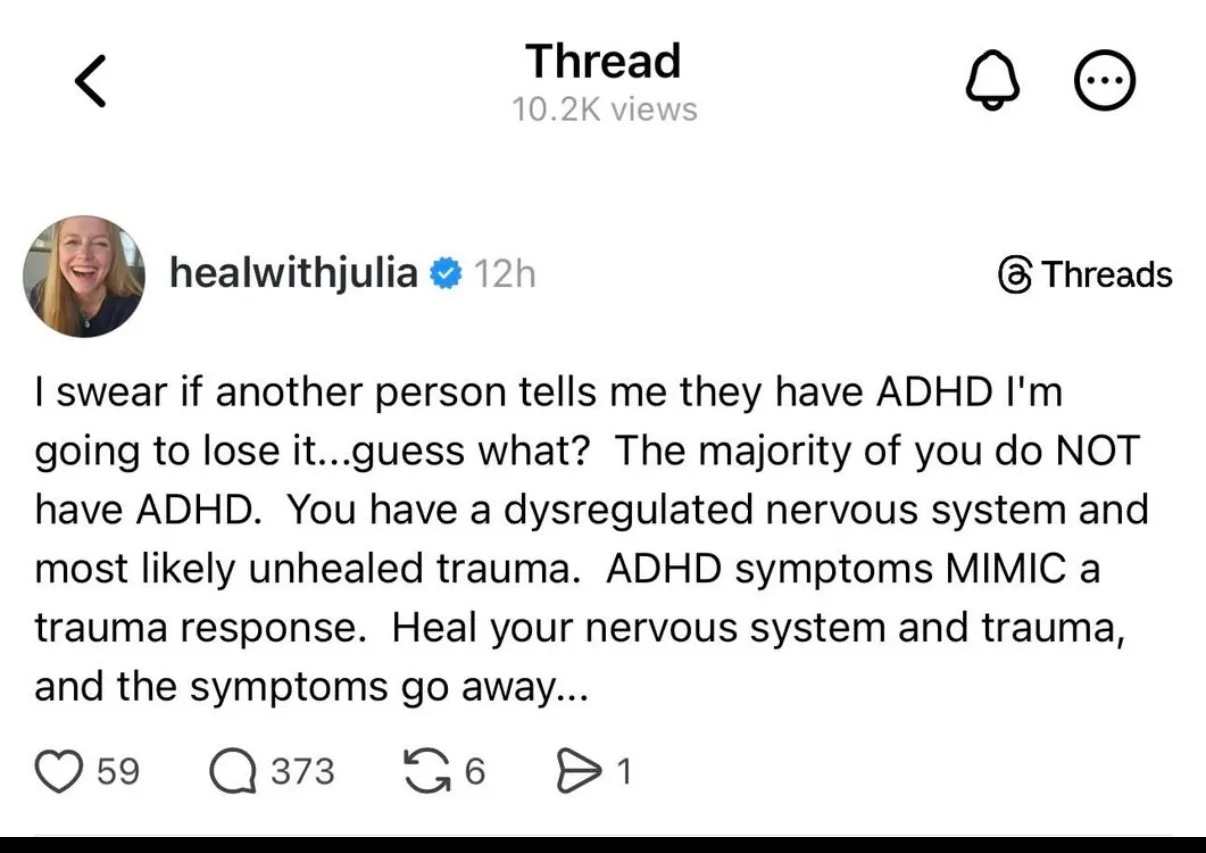
Differential diagnosis is the process of distinguishing between conditions that share similar symptoms in order to arrive at the most accurate explanation for a client’s experience. In my practice, one of the more challenging examples of this is differentiating Complex Post-Traumatic Stress (CPTSD) from Attention Deficit Hyperactivity Disorder (ADHD). Both of these diagnoses share significant overlap, including rapid mood fluctuations, impulsivity, rumination, difficulty concentrating, and difficulty establishing and maintaining friendships. Even more complicated is the fact that living with ADHD often leads to experiences that can result in CPTSD.