Truthisms as the New Therapy
Over the past several years I have seen a rapid shift in the way social media has framed our discussions of mental health. Far more concerning to me than the overuse of pop-psychology terms or the host of professionals potentially undermining the field with cringe dance videos is the slew of “wellness coaches” preaching misinformation and truthisms in their attempt to grift those who are hurting.
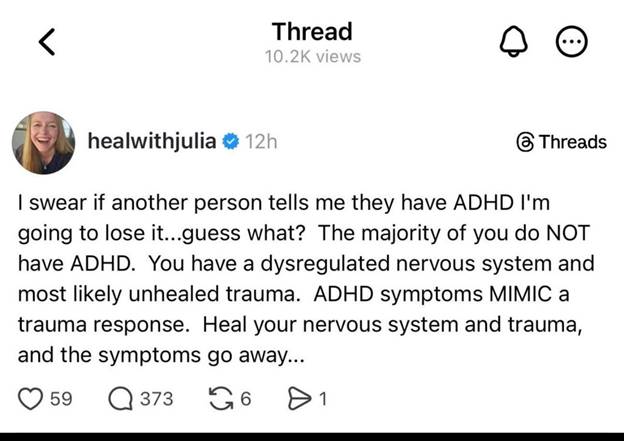
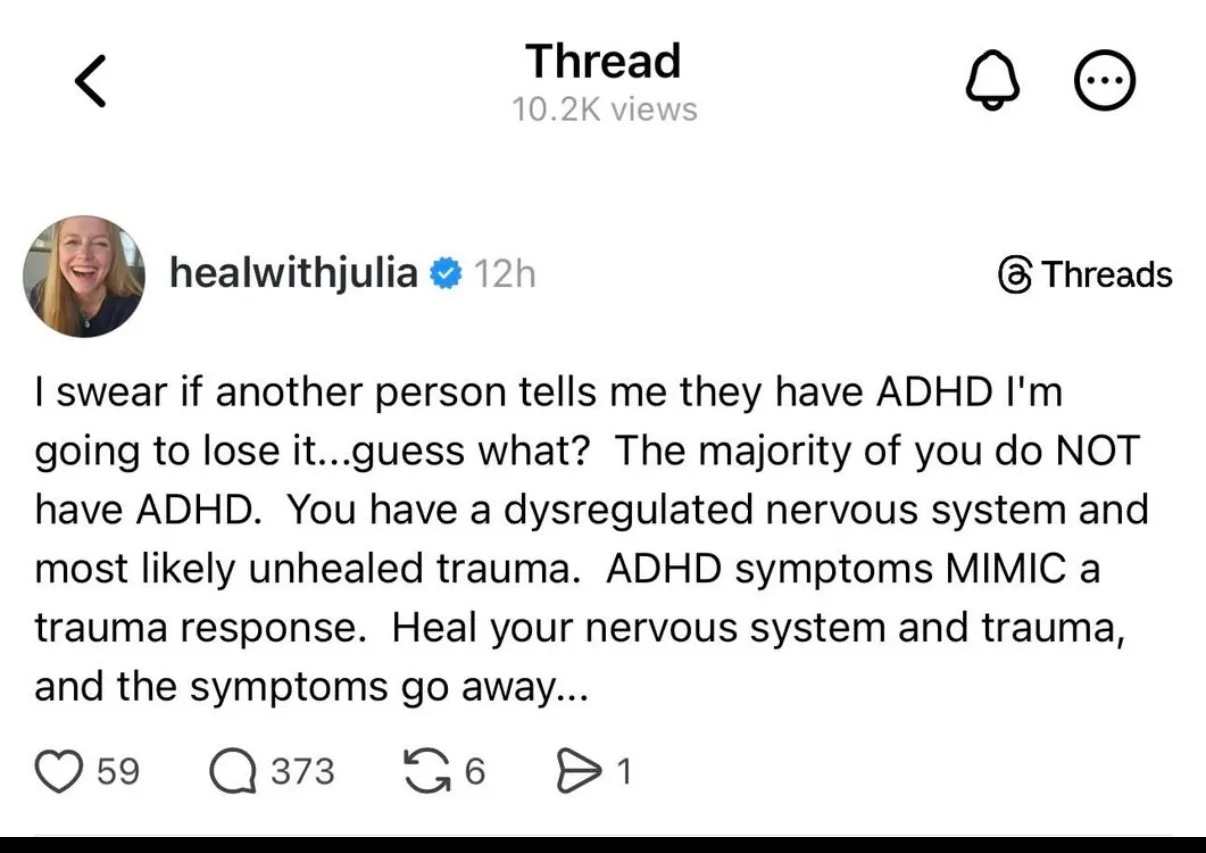
Undeniably, I take particular offense to this as someone diagnosed with ADHD and working as a LICENSED mental health practitioner. I don’t claim to be perfect, but over the years I have focused hard on improving my diet, exercise, meditation, processing the traumas I have gone through, establishing a sense of community, engaging in my passions, and building my own business.
And yet I still have ADHD. The symptoms haven’t gone away. They have changed. The ruminative spirals of the overthinking neurodivergent mind have revealed themselves, but not stopped entirely. I don’t think they ever will, nor do they have to. Everyday they are easier to work with, but despite hours of meditation, my brain seems to want to think of this and that, and can struggle to be in the present. More than anything, I view it as a beautiful part of myself, the philosophizing, entrepreneurial, existential monkey mind.
Of course, the more you live a healthy life, the better you will feel!
I see it with diet, meditation, exercise. Whatever their unique brand of BS is. Obviously, I’m not advocating against these practices, but I am holding that we are increasingly uncovering how differences in brain structures and processes affect the human experience. The science of human mental health is always evolving, complex, and never a universal fit. Things you can’t just “live a better life” yourself out of. And if you doubt me, I encourage you to go try running a mindfulness group in a psychiatric ward. Not useless, but certainly not the end all be all.
Yet this is how these influencers have always made their money. Find their philosophy and tools, and then begin preaching with dogmatic fervor. Make arguments you can’t really argue against but also hold no true weight. In a country with as horrible health outcomes as the United States, who would dare argue against eating better? Against drinking more water? In this digital age of endless consumption, who could argue against spending some time alone with your mind and body? In doing so, these wellness coaches have already positioned themselves in a position of safety, and I’d also argue, privileged authority. Not everyone has the means for a balanced diet. There are food deserts. There are parents who struggle to work, raise kids, and find time for all the things that keep a human healthy. Your ability to do these things may signal discipline, but just as likely, the simple ability to do so. And once they can rope you in with a seemingly appealing life and lifestyle, they then open the door to selling you supplements, courses, and coaching sessions.
That last point is perhaps what I find the most offensive. A trend I have noticed from even the most “enlightened” of meditators and the “healthiest” of wellnesses coaches is the subtle “better-than” attitude often pouring out of these types of people. Lovely comments like “You aren’t working hard enough”, “you are the one creating your problems”, and essentially a message of “you need to be more like me”.
In the same way that the “Manosphere” exploits the vulnerabilities of young, dejected men, so do these wellness coaches with those who are suffering with challenges that demand individualized care. I question the character of anyone willing to prey on the vulnerability of others by selling them relatively easy solutions to complex problems. I question the wisdom of anyone who claims to have found “the key” to what each new generation of researchers will devote their life to learning about.
These type of content creators are doing real harm, not just to those with ADHD, but anyone living with legitimate neurological/psychiatric differences. And it’s being done by people with no oversight, no ethics board to report to, no one holding them and their misinformation accountable.
Early in my own therapy journey, my therapist introduced me to the zen aphorism: “If you meet the Buddha on the road, kill him”
It is tempting to want easy answers. Life would be so much easier if there were certainties. But as I understand it, we are still so young in our humanness, anyone claiming to have answers should be held under intense scrutiny.
Over the past several years I have seen a rapid shift in the way social media has framed our discussions of mental health. Far more concerning to me than the overuse of pop-psychology terms or the host of professionals potentially undermining the field with cringe dance videos is the slew of “wellness coaches” preaching misinformation and truthisms in their attempt to grift those who are hurting.
Undeniably, I take particular offense to this as someone diagnosed with ADHD and working as a LICENSED mental health practitioner. I don’t claim to be perfect, but over the years I have focused hard on improving my diet, exercise, meditation, processing the traumas I have gone through, establishing a sense of community, engaging in my passions, and building my own business.
And yet I still have ADHD. The symptoms haven’t gone away. They have changed. The ruminative spirals of the overthinking neurodivergent mind have revealed themselves, but not stopped entirely. I don’t think they ever will, nor do they have to. Everyday they are easier to work with, but despite hours of meditation, my brain seems to want to think of this and that, and can struggle to be in the present. More than anything, I view it as a beautiful part of myself, the philosophizing, entrepreneurial, existential monkey mind.
Of course, the more you live a healthy life, the better you will feel!
I see it with diet, meditation, exercise. Whatever their unique brand of BS is. Obviously, I’m not advocating against these practices, but I am holding that we are increasingly uncovering how differences in brain structures and processes affect the human experience. The science of human mental health is always evolving, complex, and never a universal fit. Things you can’t just “live a better life” yourself out of. And if you doubt me, I encourage you to go try running a mindfulness group in a psychiatric ward. Not useless, but certainly not the end all be all.
Yet this is how these influencers have always made their money. Find their philosophy and tools, and then begin preaching with dogmatic fervor. Make arguments you can’t really argue against but also hold no true weight. In a country with as horrible health outcomes as the United States, who would dare argue against eating better? Against drinking more water? In this digital age of endless consumption, who could argue against spending some time alone with your mind and body? In doing so, these wellness coaches have already positioned themselves in a position of safety, and I’d also argue, privileged authority. Not everyone has the means for a balanced diet. There are food deserts. There are parents who struggle to work, raise kids, and find time for all the things that keep a human healthy. Your ability to do these things may signal discipline, but just as likely, the simple ability to do so. And once they can rope you in with a seemingly appealing life and lifestyle, they then open the door to selling you supplements, courses, and coaching sessions.
That last point is perhaps what I find the most offensive. A trend I have noticed from even the most “enlightened” of meditators and the “healthiest” of wellnesses coaches is the subtle “better-than” attitude often pouring out of these types of people. Lovely comments like “You aren’t working hard enough”, “you are the one creating your problems”, and essentially a message of “you need to be more like me”.
In the same way that the “Manosphere” exploits the vulnerabilities of young, dejected men, so do these wellness coaches with those who are suffering with challenges that demand individualized care. I question the character of anyone willing to prey on the vulnerability of others by selling them relatively easy solutions to complex problems. I question the wisdom of anyone who claims to have found “the key” to what each new generation of researchers will devote their life to learning about.
These type of content creators are doing real harm, not just to those with ADHD, but anyone living with legitimate neurological/psychiatric differences. And it’s being done by people with no oversight, no ethics board to report to, no one holding them and their misinformation accountable.
Early in my own therapy journey, my therapist introduced me to the zen aphorism: “If you meet the Buddha on the road, kill him”
It is tempting to want easy answers. Life would be so much easier if there were certainties. But as I understand it, we are still so young in our humanness, anyone claiming to have answers should be held under intense scrutiny.